Use case · Journalists

DigUp for journalists

Reporting folders hold hours of audio and messy scans. DigUp jumps to moments and pages via EmbeddingGemma 2 — files stay on your machine.

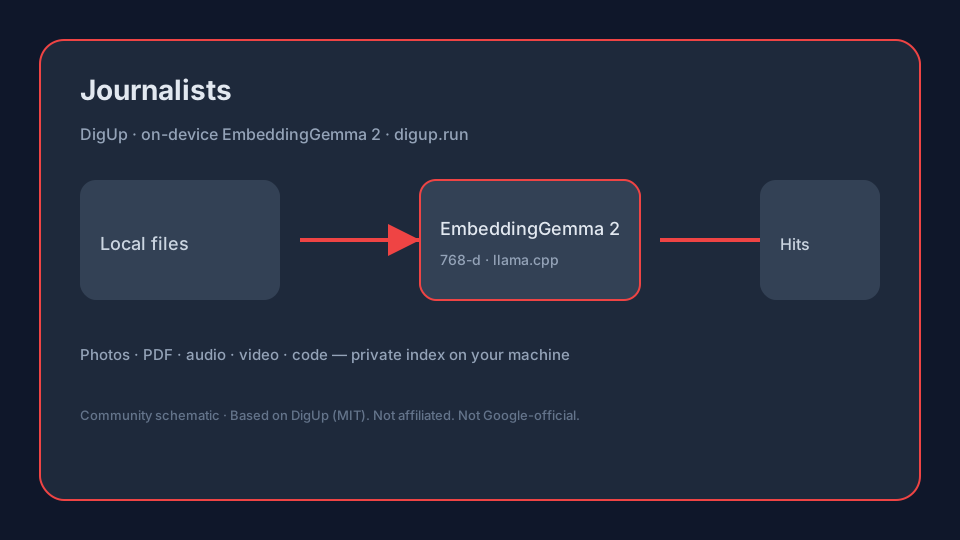
On-device flowSchematic: DigUp uses EmbeddingGemma 2 for Journalists local search
Original schematic — DigUp indexes local files with EmbeddingGemma 2 (llama.cpp).

Sourced snapshot (2026-10-15)

FactValueSource
ModelEmbeddingGemma 2 · ~740M params · ~865 MB Q8 via llama.cppGoogle AI · DigUp README
Vector space768-d shared multimodal spaceGoogle AI · DigUp README
Mac / Win·Linux0.6.1 · 0.7.0-beta.1GitHub Releases
Stars / forks~3,768 / ~254GitHub API

Pain → DigUp workflow → tip

PainDigUp + EmbeddingGemma 2 workflowTip
Where did they mention the budget?Audio 30s windowsJump near the quote
B-roll of the protest signVideo frame embeddingsFind by what’s on screen
FOIA PDF needlePDF page meaning + keywordsOpen at the page
Source privacyLocal-first DigUpNo DigUp account; choose folders carefully

Numbered checklist

  1. Install DigUp; index Interviews / Research locally (download cloud proxies first).
  2. Finish ~865 MB EmbeddingGemma 2 download.
  3. Query spoken topics; verify quotes in the player before publishing.
  4. Use overnight indexing for multi-hour media.
  5. See FAQ for model size / Use Files if network blocked.

Why EmbeddingGemma 2 matters here

Google’s EmbeddingGemma 2 (~740M, unified 768-d multimodal space) is what DigUp runs via llama.cpp (~865 MB Q8 package). One query can rank images, PDF pages, audio windows, video frames, and optional code — see the local multimodal guide and model page. digup.run is not Google-official.

Downloads & installs

Related